
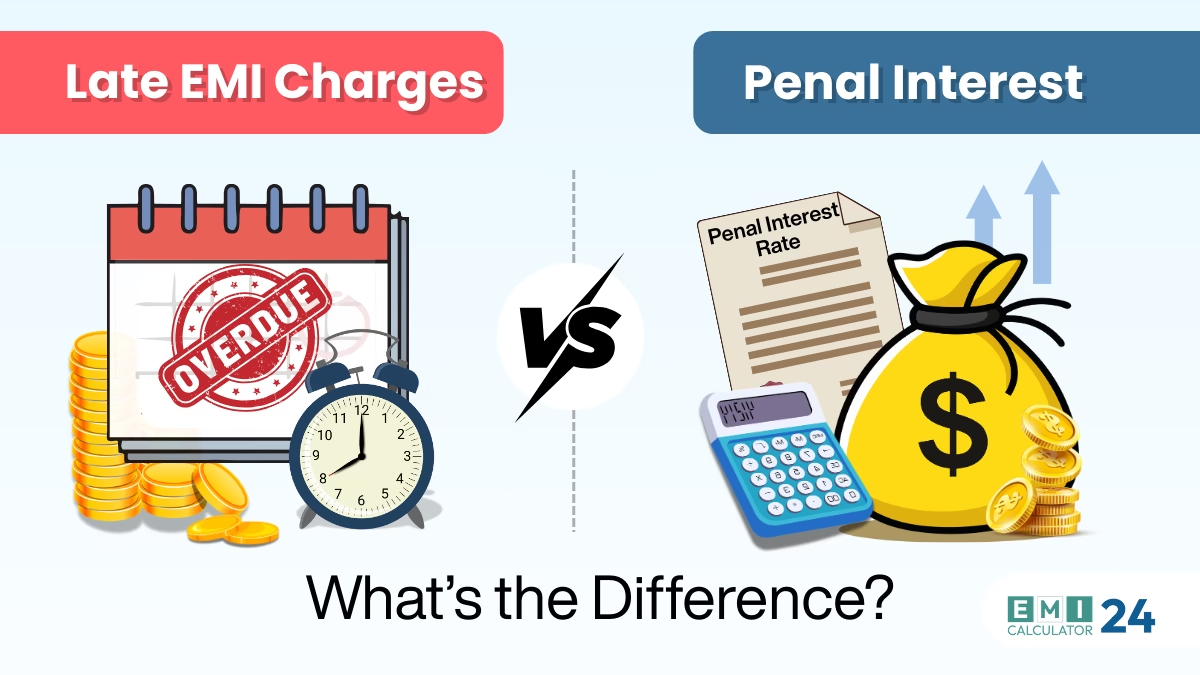
Paying EMI on time looks simple. But one small delay can increase your loan cost. ⚠️
Many borrowers think late fee and penal interest are the same. But they are different. If you do not understand this difference, you may end up paying more than expected.
🔹 In simple words:
-
Late EMI charge is a fixed penalty. 💰
-
Penal interest is extra interest on delayed payment. 📈
🔹 This guide will clearly explain:
-
What penalty interest means
-
How penalty interest in banking works
-
How penalty interest rate is applied
-
The penalty interest formula with example
-
What penalty interest RBI guidelines say
Let’s break it down step by step. 👇
Before understanding penalty charges, make sure your EMI is affordable based on your income.
| 🔎 Check Loan Eligibility |
1️⃣ What Are Late EMI Charges?
Late EMI charges are a fixed fee that the bank takes when you pay your EMI after the due date.
Usually:
-
It can be ₹300 to ₹1,000
-
Or 1%–2% of the EMI amount
-
It may be charged for every missed EMI
It is a one-time penalty.
Example:
If your EMI is ₹10,000 and you are 5 days late, the bank may charge ₹500 as a late fee.
2️⃣ What Is Penal Interest?
Penalty interest is an extra interest charged on the overdue amount when you delay your EMI payment. 📊
It is added on top of your normal interest.
It is important to understand late payment interest because it keeps increasing until you clear the payment. ⏳
🔹 Simple meaning of penalty interest in banking:
When a borrower does not pay the EMI on time, the bank charges extra interest on the overdue amount. This extra charge is called late payment interest.
3️⃣ Late EMI Charges vs Penal Interest – Main Difference
| Basis | Late EMI Charges | Penalty Interest |
|---|---|---|
| Type | Fixed fee | Extra interest |
| How it is charged | One-time | Per day or per month |
| Amount | Pre-decided | Percentage based |
| Effect | Small short-term impact | Increases total loan cost |
| Example | ₹500 fixed | 2% per month on overdue |
In short:
Late EMI charge is a fine. Overdue interest is extra interest on the delayed amount.
4️⃣ How Is Penal Interest Rate Decided?
The penalty interest rate is not the same for every loan.
It depends on:
-
Type of loan
-
Bank or NBFC policy
-
Risk profile of borrower
-
Length of delay
📊 Typical Penal Interest Rate Comparison
| Loan Type | Normal Interest | Penalty Interest Rate (Extra) |
|---|---|---|
| Home Loan | 8%–10% | +1% to 2% |
| Car Loan | 9%–12% | +2% |
| Personal Loan | 12%–18% | +2% to 3% |
| Credit Card | 30%–42% | Very high penal charges |
Credit cards usually have the highest penalty interest rate.
Always check your loan agreement to see the exact penalty interest rate mentioned. 📑
5️⃣ Understanding the Penal Interest Formula
Many people search for the penal interest formula because they want to calculate the extra amount clearly.
🔹 Basic Penalty Interest Formula:
Penalty Interest = Overdue Amount × Penal Rate × Time Period
But remember:
-
If rate is monthly → calculate per month
-
If rate is yearly → divide accordingly
📌 Detailed Example:
Suppose:
-
Overdue amount = ₹50,000
-
Penalty interest rate = 2% per month
-
Delay = 2 months
Calculation:
₹50,000 × 2% = ₹1,000 per month
For 2 months → ₹2,000 extra
So total extra payment = ₹2,000
This is a practical penalty interest example that shows how fast cost increases. 📈
Want to calculate your EMI and avoid future penalty charges?
| Calculate Your EMI Now |
6️⃣ How Does a Penal Interest Calculator Work?
An online penalty interest calculator helps you calculate the exact extra amount. 🧮
You just need to enter:
-
Overdue amount
-
Penalty interest rate
-
Delay period
The calculator shows the penalty interest amount automatically.
It is helpful when you want to know your total outstanding amount quickly.
7️⃣ What Do Penal Interest RBI Guidelines Say?
As per penalty interest RBI guidelines:
-
Penal charges must be reasonable.
-
Banks cannot charge penalty on penalty.
-
Penalty interest should not be used as revenue income.
-
Charges must be clearly mentioned in loan agreement.
-
Borrower must be informed before applying charges.
Recently, RBI advised banks to use the term “penal charges” instead of confusing interest-on-interest practices.
This improves transparency in penalty interest in banking.
So if you feel charges are unfair, you can complain to the bank or banking ombudsman. 🏦
8️⃣ Real-Life Penal Interest Example
Suppose:
-
EMI = ₹15,000
-
Delay = 20 days
-
Penalty interest rate = 2% per month
Penalty interest for 20 days:
₹15,000 × 2% × (20/30)
= Around ₹200
If you delay for 3 months, the amount will increase more.
So ignoring penalty interest can become expensive. ⚠️
9️⃣ Which One Is More Risky?
Short delay (1–5 days):
✔ Late EMI charges hurt less.
Long delay (1–3 months):
❗ Penalty interest becomes heavy.
Very long delay:
⚠ Both charges + legal action + credit score damage possible.
So penalty interest becomes dangerous when delay period increases.
🔟 Impact on Credit Score
Many people ignore penal interest thinking it is small.
But delay in EMI payment can:
-
Reduce your CIBIL score 📉
-
Stay in credit report for years
-
Make future loans expensive
-
Increase future penal interest risk
Even one 30-day delay can hurt your credit history.
So penal interest is not just about extra money. It also affects your financial reputation.
Planning to apply for a new loan? Check your eligibility first.
| Check Loan Eligibility |
1️⃣1️⃣ How to Avoid These Charges?
-
Activate auto debit for EMI
-
Set payment reminders
-
Keep an emergency fund (at least 3 EMI amount) 💼
-
Talk to the bank if you face financial problems
Taking action on time can help you avoid penalty interest and extra charges.
❓ Frequently Asked Questions
Q1. Is Overdue Interest interest legal?
A1: Yes. Overdue Interest is legal if applied as per RBI rules and mentioned in loan agreement.:
Q2. Can banks charge compound penalty interest?
A2: As per penalty interest RBI guidelines, banks should not charge penalty on penalty.
Q3. Is penalty interest refundable?
A3: Normally no. But if charged wrongly, you can raise complaint.
Q4. Does penalty interest affect credit score?
A4: Indirectly yes. Delay in EMI payment affects credit report.
📝 Conclusion
Late EMI charges and penal interest may look similar, but they are not the same. A late EMI charge is usually a fixed penalty, while penal interest is extra interest that keeps increasing on the overdue amount.
Even a small delay can increase your loan cost. If the delay continues, penalty interest can grow quickly and also affect your credit score.
The smart approach is simple:
-
✔ Understand your loan terms clearly
-
✔ Check the penalty interest rate mentioned in your agreement
-
✔ Use EMI calculators to plan properly
-
✔ Always try to pay before the due date
When you stay informed, you stay financially safe.
Timely EMI payment not only saves money but also protects your financial reputation in the long run.