
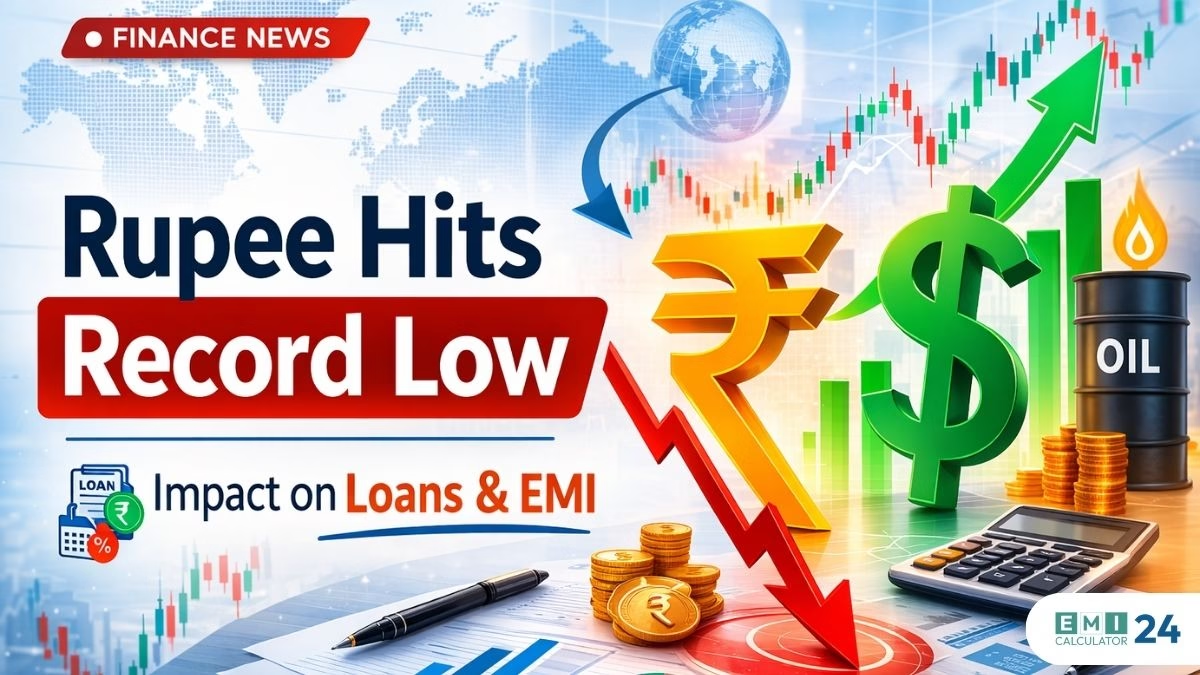
Rupee Hits Record Low Against Dollar has become one of the most important financial developments affecting India’s economy. The Indian Rupee recently slipped to around 92.43 against the US Dollar, marking its weakest level in history.
Currency movements may seem like distant financial news, but when the rupee weakens, it can directly affect inflation, fuel costs, loan interest rates, and monthly household budgets.
Understanding why the rupee is falling and how it affects everyday finances can help borrowers and investors make smarter financial decisions.
📉 Why Rupee Hits Record Low Against Dollar
Several global and domestic factors have contributed to the situation where the Rupee Hits Record Low Against Dollar.
1. Rising Global Oil Prices 🛢️
Since India depends on overseas suppliers for a large share of its crude oil, changes in global prices can quickly affect the economy. When oil prices rise globally, India must pay more dollars for energy imports. A weaker rupee further increases these costs.
2. Global Economic Uncertainty 🌍
When investors seek safer assets during global uncertainty, they often move money into US markets. This increases demand for the dollar and weakens other currencies.
3. Capital Outflows from Emerging Markets 💰
Foreign investors sometimes shift investments away from emerging economies toward developed markets offering higher returns.
4. Trade Deficit Pressure 📊
India imports more goods than it exports. A wider trade deficit increases the demand for foreign currency, putting pressure on the rupee.
These combined factors explain why the Rupee Hits Record Low Against Dollar and why markets are closely monitoring the situation.
How a Weak Rupee Affects Daily Life 💸
When the Rupee Hits Record Low Against Dollar, the impact extends beyond financial markets and affects everyday life.
Here are some areas where consumers may notice changes:
| Impact Area | Possible Effect |
|---|---|
| Fuel prices | Petrol and diesel may become costlier |
| Imported goods | Electronics and machinery may rise in price |
| Travel expenses | Foreign travel becomes more expensive |
| Inflation | Overall cost of living may increase |
As businesses face higher import costs, these expenses are often passed on to consumers through higher prices.
Impact on Loans and EMI Payments 🏦
For borrowers, one of the most important concerns when the Rupee Hits Record Low Against Dollar is the potential impact on loan interest rates.
If inflation increases due to higher import costs, the Reserve Bank of India may tighten monetary policy to control price pressures.
Possible outcomes include:
-
Increase in lending interest rates
-
Higher EMI for floating-rate loans
-
More expensive new loans for homebuyers and car buyers
For people with home loans or personal loans, even a small interest rate increase can affect long-term repayment costs.
Want to see how interest rate changes can affect your monthly loan payment?
| Calculate Your Loan EMI 🧮 |
What It Means for the Indian Economy
Although currency depreciation creates challenges, it can also provide some benefits.
When the Rupee Hits Record Low Against Dollar, exporters receive more rupees for the dollars they earn from global markets.
Industries that may benefit include:
-
IT services
-
pharmaceutical companies
-
textile exporters
However, since India relies heavily on imported energy and raw materials, prolonged currency weakness may still increase inflation risks.
Practical Tips for Borrowers and Investors
During periods when the Rupee Hits Record Low Against Dollar, financial planning becomes more important.
Here are some practical steps individuals can consider:
Review Loan Terms
Borrowers with floating interest rates should track market trends and lender updates.
Avoid Unnecessary Debt
Higher interest rates can increase repayment costs over time.
Maintain Emergency Savings
Economic uncertainty makes financial safety buffers more important.
Diversify Investments
Investments in diversified assets can help manage risk during economic volatility.
Conclusion 📌
The fact that the Rupee Hits Record Low Against Dollar reflects broader global economic pressures and changing market conditions.
While currency fluctuations may appear technical, they can influence inflation levels, fuel prices, loan interest rates, and monthly EMI payments.
For Indian households, borrowers, and investors, staying informed about such economic developments is essential for better financial planning. Policymakers and the Reserve Bank of India will continue monitoring the situation to maintain stability in the financial system.