
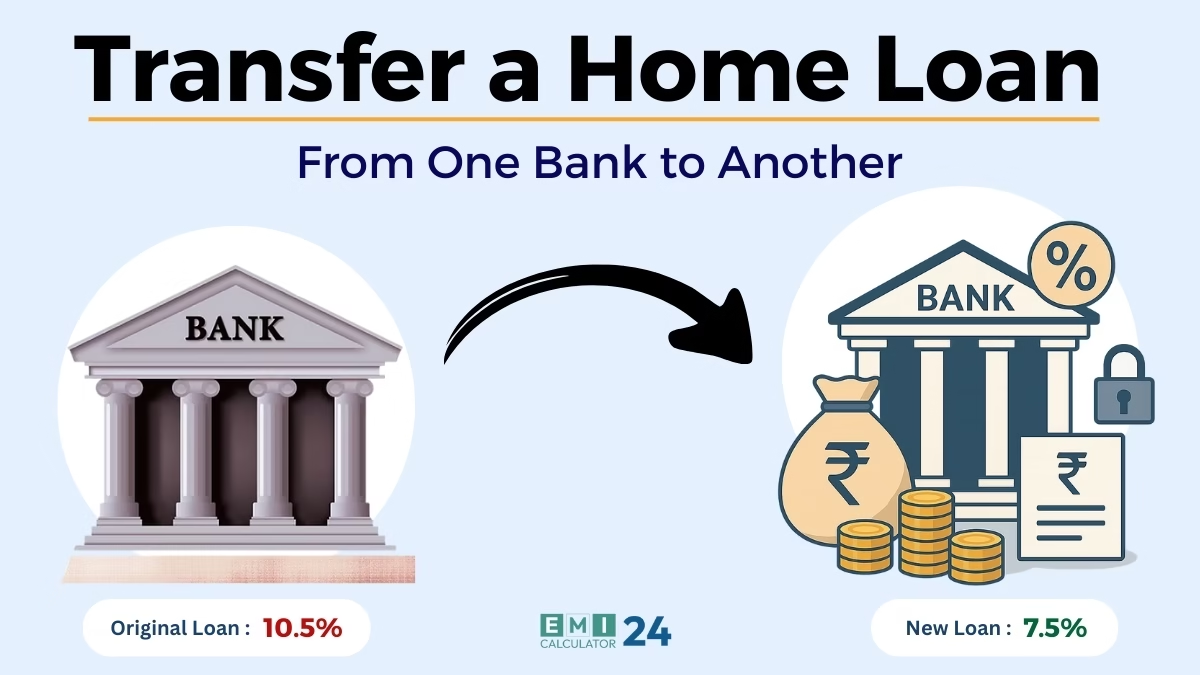
Transferring a home loan sounds difficult, but the process is actually simple if you understand each step clearly. When you Transfer a Home Loan, you move your existing loan from your current bank to a new bank that offers a better interest rate or better services. This small change can help you save a lot of money over time.
In this guide, you’ll learn everything—why people transfer, how the process works, what documents are required, what charges apply, and which bank is best for you. Let’s start. 😊
⭐ Why People Transfer a Home Loan
A home loan usually runs for 15–30 years. During such a long period, even a 1% lower interest rate can save you thousands of rupees every year.
That’s one of the biggest reasons people choose to Transfer a Home Loan to another bank.
💡 What is a home loan balance transfer?
A home loan balance transfer simply means shifting your remaining loan amount to another bank that offers a lower interest rate, better processing, or more flexible terms.
💰 How interest reduction helps you save money
Small difference, big impact!
For example:
 Your current rate: 10.5%
- New bank rate: 8.7%
- Loan outstanding: ₹25,00,000
 Your current rate: 10.5%
👉 You can save more than ₹4,00,000 in the long run.
🎯 When is the right time to transfer your home loan?
You should consider transferring when:
- Interest rate difference is 1% or more
- You have 10+ years left on the loan
- You have a good credit score (700+)
- You want a top-up loan
- Your current bank is not offering better rates
⭐What Does “Transfer a Home Loan” Mean?
When you Transfer a Home Loan, your old bank receives the remaining loan amount from your new bank. After this, you start paying your EMIs to the new bank.
👍 Simple meaning of home loan transfer
Your loan doesn’t start from zero again.
Only the remaining loan amount moves to the new bank.
🔄 Balance transfer vs. mortgage loan transfer
| Type | Meaning |
|---|---|
| Balance Transfer | Only the remaining loan is moved to a new bank |
| Mortgage Loan Transfer | Property mortgage documents also move to new bank |
📈 Loan transfer trend in India
In India, more people are transferring home loans because banks now offer:
- Faster approvals
- Online document checks
- Lower special rates for new customers
⭐ Benefits of Transferring a Home Loan to Another Bank
Transferring your home loan has many advantages. Here are the most important ones:
1. Lower Interest Rate
This is the main reason people switch banks.
2. Lower Monthly EMI
Lower interest = lower EMI = more savings. 😊
3. Top-Up Loan Facility
Many banks allow a top-up loan for renovation, education, medical needs, or personal use.
4. Better Loan Terms
- Easy prepayment
- Better customer service
- Flexible tenure
- No hidden conditions
Home Loan Transfer: Pros & Cons
Before you decide, here’s a quick Pros & Cons summary to help you understand the advantages and minor drawbacks of transferring your home loan:
Example Table:
| Pros ✅ | Cons ❌ |
|---|---|
| Lower interest rates → save money 💰 | Some banks charge processing fees |
| Reduced EMI → easier monthly payments | Foreclosure charges may apply if loan is new |
| Top-up loan option → extra funds available | Takes time for document verification |
| Better loan terms & customer service | May require a property revaluation |
⭐ Eligibility Criteria Before You Transfer a Home Loan
Not everyone can transfer a home loan. Banks check some basic conditions.
📌 Minimum repayment history
You must have paid at least 12 EMIs in your current bank.
📌 Credit score requirement
A credit score of 700 or above makes the process faster and easier.
📌 Bank-specific conditions
Banks check:
- Your income stability
- EMI payment history
- Property legal status
📌 Common rules in SBI, HDFC, ICICI
- Loan must be at least 1 year old
- No late EMI payments
- Clean bank records
⭐ Documents Required for Home Loan Transfer
🧾 KYC Documents
- Aadhaar Card
- PAN Card
- Passport-size photos
🧾 Income Documents
- Salary slips
- Income Tax Return
- Last 6 months’ bank statement
🧾 Property Documents
- Original sale deed
- Property tax receipts
- Approved building plan
🧾 Loan Documents
- Past EMI history
- Loan account statement
- Foreclosure letter / NOC
⭐ Step-by-Step Process: How to Transfer a Home Loan from One Bank to Another
Let’s break down the process in simple steps.
🏦 Step 1: Compare Interest Rates & Charges
Check at least 4–5 banks before deciding.
📝 Step 2: Request a Home Loan Balance Transfer Offer
Banks check your CIBIL score and salary documents.
🧾 Step 3: Apply for a Foreclosure Letter From Old Bank
Your old bank gives you:
- Outstanding balance
- Foreclosure quote
- Document list
📑 Step 4: Submit All Documents to New Bank
New bank verifies everything.
💸 Step 5: New Bank Pays the Old Bank
This is the moment your loan officially shifts.
🏁 Step 6: Start Paying EMI to the New Bank
And your home loan transfer is done! 🎉
This is the complete home loan transfer to another bank process.
⭐ Charges Involved in Home Loan Transfer
When you decide to Transfer a Home Loan, it’s important to know all charges clearly. These charges vary by bank and state.
| Charge Type | Typical Cost | Notes |
|---|---|---|
| Processing Fee | ₹2,000 – ₹10,000 | Paid to the new bank for starting your loan transfer |
| Legal & Technical Evaluation Fee | ₹3,000 – ₹8,000 | Bank checks your property and documents |
| Foreclosure Charges | Usually 0 | Some banks may charge 1–2% if the loan is very recent |
| Stamp Duty | Varies by state | Only applies if property ownership documents are updated |
Example:
If you transfer a home loan of ₹20 lakh, your Home loan transfer from one bank to another charges may be around ₹6,000–₹12,000 depending on your bank. Always compare the charges before starting the process.
⭐ Home Loan Balance Transfer Interest Rates (2025)
⭐ Which Bank Is Best for Home Loan Transfer?
Choosing the right bank is crucial when you Transfer a Home Loan. Interest rates, fees, and customer service all matter. Here’s a quick comparison:
| Bank | Best For | Notes |
|---|---|---|
| SBI | Lowest interest rates | Ideal for long-term savings |
| HDFC | Smooth processing | Faster verification and good customer service |
| ICICI | Fast approval | Good for self-employed borrowers |
| Axis | Flexible tenure | Allows you to extend or reduce EMIs easily |
💡 Tip: Always check both interest rates and hidden fees before transferring. Sometimes the lowest rate may have higher processing charges.
⭐ Home Loan Balance Transfer Calculator (How to Use + Example)
A calculator helps you see your potential savings before you transfer.
How to Use:
-
Enter your existing loan amount
-
Enter your current interest rate and new bank’s rate
-
Check monthly EMI and total savings
👉 Try our Home Loan EMI Calculator to see exact savings
| Home Loan EMI Calculator |
📊 Example Calculation:
Loan balance: ₹25,00,000
Old rate: 10.5%
New rate: 8.7%
Tenure left: 15 years
✅ Savings: Around ₹4,20,000
👉 Many users also search for a simple tool called the “Transfer a Home Loan from One Bank to Another calculator”, which works the same way as a normal home loan calculator and helps you check your EMI savings easily.
⭐ Home Loan Balance Transfer with Top-Up Loan
✨ What is a Top-Up Loan?
A top-up loan lets you borrow extra money along with your existing home loan.
Example:
You have a home loan of ₹30 lakh. You need ₹5 lakh for home renovation. Instead of taking a personal loan at high interest, you can use a Home loan balance transfer with top-up from your new bank. Now you pay a lower combined interest rate.
💡 Who is eligible?
- Good credit score
- Clean EMI history
- Property value supports extra loan
🏦 Best Banks for Top-Up Transfer
- SBI
- HDFC
- ICICI
👉 Check your exact eligibility quickly with our easy-to-use loan eligibility calculator:
| Home Loan Eligibility |
⭐ SBI Home Loan Transfer
✔ Eligibility
- 12 months repayment history
- No cheque bounce
- Good credit score
✔ Documents Required
- KYC
- Property papers
- All loan statements
✔ Interest Rate
- 8.50% – 9.15%
⭐Home Loan Transfer from One Person to Another 👨👩👧
Sometimes, loans are transferred from one person to another, e.g., family members or co-borrowers.
Why it happens:
- Property inherited or gifted
- Adding/removing co-borrower
- Selling property
Process:
-
Submit a legal request to the bank
-
Provide updated identity and property documents
-
Bank issues NOC and transfers the loan
📄 Documents Needed
- Sale deed
- Gift deed
- Bank NOC
- Identity proofs
Tip: Banks check the credit score and repayment history of the new borrower before approval.
⭐ Sample Letter Format for Home Loan Transfer Request ✉️
Here’s a simple template you can use to request a home loan transfer:
Subject: Request for Home Loan Transfer
Body:
Dear Sir/Madam,
I request you to initiate the transfer of my home loan (Loan No. ________).
Kindly issue my foreclosure letter and loan account statement at the earliest.
Thank you for your support.
Regards,
[Your Name]
[Loan Account Number]
[Contact Details]
Pro Tip: You can also send this as an email; just use the same format with a polite subject line.
⭐ Common Mistakes to Avoid During Home Loan Transfer
❌ Not checking hidden charges
❌ Not comparing interest rates
❌ Ignoring credit score
❌ Submitting incomplete documents
⭐ Should You Transfer a Home Loan? (Expert Tips)
👍 Good time to transfer
- Rate difference is 1% or more
- Tenure is long
- Charges are low
👎 Avoid transfer when
- Only 2–3 years left in your loan
- Transfer cost is too high
⭐ FAQs Section
Q1. What is the complete process for a home loan balance transfer❓
A1: The process becomes very easy when you follow clear steps:
- Compare interest rates, charges, and top-up options
- Check eligibility — credit score, EMI history, documents
- Apply for a balance transfer with the new bank
- Get a foreclosure letter from your old bank
- Submit documents (KYC, income, property papers, statements)
- Verification by the new bank (1–2 weeks)
- New bank pays the old bank
- Loan shifts, and you start paying EMI to the new bank
Q2. How to transfer a home loan from one bank to another in India❓
A2: In India, the steps are simple:
- New bank checks your credit score, income, and property
- You receive a loan offer
- Old bank issues a foreclosure letter
- New bank clears old loan
- Property documents shift to the new bank
- Tip: You should transfer only when the interest difference is at least 1%, otherwise savings are low.
Q3. What is the 20-30-40 rule for home loans❓
A3: It is a simple budgeting rule:
- 20% = Savings
- 30% = EMI
- 40% = Living expenses
- This rule helps you avoid financial stress when taking or transferring a home loan.
Q4. How long does the home loan transfer process take❓
A4: Most banks finish the process in 2–4 weeks, depending on:
- Document completeness
- Legal/technical property check
- Your credit score
- Workload of the bank
Some banks like SBI, HDFC, and ICICI complete it even faster if your documents are clear.
Q5. Can I get a top-up loan during the balance transfer❓
A5: Yes!
Many banks offer a Home Loan Balance Transfer with Top-Up, especially when:
- Your credit score is good
- Your EMI record is clean
- Property value is high enough
Top-up loans are helpful for renovation, education, medical needs, or personal expenses.
Q6. What are the common charges involved in a home loan transfer❓
A6: You may pay:
- Processing fee: ₹2,000 – ₹10,000
- Legal + technical check: ₹3,000 – ₹8,000
- Stamp duty: Depends on state
- Foreclosure charges: Usually zero for floating-rate loans
Always check charges before deciding, because they affect your final savings.
⭐ Conclusion
Choosing to Transfer a Home Loan can be one of the smartest financial decisions you make.
A small reduction in interest can save you a lot of money.
Just compare banks, understand charges, check your credit score, and follow the step-by-step process.
A well-planned home loan transfer gives you peace of mind and long-term savings. 😊