
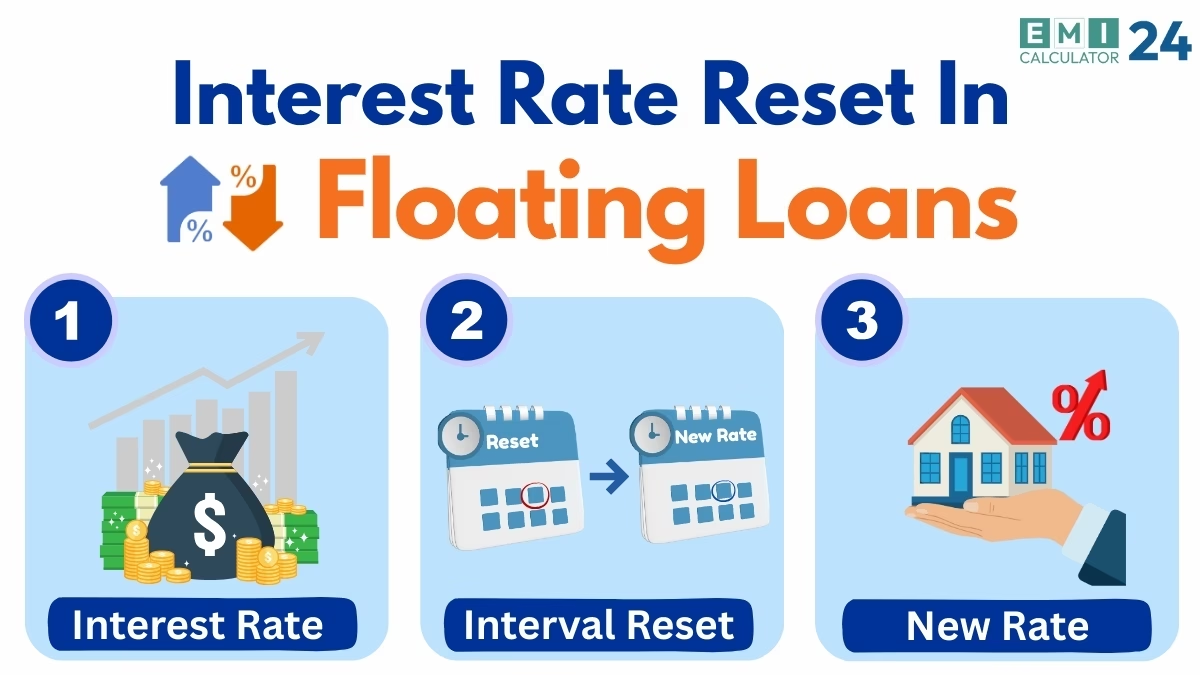
Interest Rate Reset in Floating Loans is one of the most important concepts every loan borrower should understand before using an EMI calculator or choosing a loan. This guide explains everything in simple language, with real-life examples and practical tips. 😊
👉 Quickly find out if you qualify for loans based on your financial profile and credit score.
| CHECK YOUR LOAN ELIGIBILITY |
What Is a Floating Loan Interest Rate?💸
A floating interest rate is a loan interest rate that changes over time based on market conditions. Banks link it to benchmarks like repo rate or MCLR.
Simple Example 📌
If your home loan rate is Repo Rate + 2%, and the repo rate changes, your loan rate changes too.
What Does Interest Rate Reset Mean in Floating Loans?🔄
An interest rate reset means the bank updates your loan interest rate according to the latest benchmark.
This update process is known as Interest Rate Reset in Floating Loans, and it directly affects your EMI or loan tenure.
How Interest Rate Reset in Floating Loans Works🏦
This section is logically the most important, as it helps users understand the actual mechanism.
Step-by-Step Process (Simple Flow) 🔄
-
Loan is disbursed
The bank links your floating rate loan to a benchmark (such as the repo rate). -
Reset date is decided 📅
Every loan agreement specifies a reset cycle — usually 6 months or 12 months. -
Benchmark rate changes📉📈
The RBI repo rate may increase or decrease. -
Bank applies the new rate
On the reset date, the bank applies the updated benchmark plus its fixed spread. -
EMI or tenure is adjusted
-
Either the EMI changes
-
Or the loan duration increases or decreases
-
Real-Life Example 🏠
-
✅Loan amount: ₹30,00,000
-
✅Old interest rate: 9%
-
✅EMI: ₹27,000 (approx)
If the rate after reset becomes 8.5%:
-
✅EMI ≈ ₹25,800
-
✅Or the loan tenure may reduce by 2–3 years
👉 This is why using an EMI calculator after a reset is extremely useful.
Key Factors That Affect Interest Rate Reset⚙️
Several factors influence Interest Rate Reset in Floating Loans:
-
✅RBI repo rate changes
-
✅Bank’s internal policy
-
✅Loan agreement reset clause
-
✅Market liquidity
Interest Rate Reset Frequency Explained⏰
Reset frequency determines how quickly the new rate will reflect in your loan.
Common Reset Cycles ⏱️
-
✅3 months
-
✅6 months
-
✅12 months
Monthly vs Annual Reset
| Reset Type | Pros | Cons |
|---|---|---|
| Monthly | Quick benefits | More volatility |
| Annual | Stable | Delay in benefits |
Which Is Better? 🤔
-
✅Home Loan: Annual reset is more stable
-
✅Car Loan: 6–12 months is ideal
-
✅Business Loan: Shorter reset cycles are useful
Impact of Interest Rate Reset on EMI and Loan Tenure💡
This section is the most practical for users, as it directly affects their monthly budget 💸
Two Possible Scenarios
Scenario 1: EMI Same, Tenure Changes ⏳
-
✅EMI remains stable
-
✅If interest increases, the loan period extends
-
✅More interest is paid over the long term
Scenario 2: Tenure Same, EMI Changes 📈
-
✅Loan period remains fixed
-
✅EMI increases or decreases
-
✅Helps with clearer budget planning
Comparison Table 📊
| Option | EMI Impact | Tenure Impact | Best For |
|---|---|---|---|
| EMI same | No change | Increases | Short-term cash safety |
| Tenure same | Changes | No change | Long-term savings |
Real-Life Case 🏠
Anita took a home loan. When the interest rate increased, her EMI stayed the same, but the loan tenure extended by 3 years — increasing her total interest burden.
👉 See how interest rate resets can change your EMI and loan tenure instantly.
| RECALCULATE YOUR EMI |
Floating Loan vs Fixed Loan Interest Rate Reset⚖️
Unlike floating loans, fixed loans do not change rates.
| Feature | Floating Loan | Fixed Loan |
|---|---|---|
| Rate Change | Yes | No |
| EMI Impact | Flexible | Stable |
| Benefit | Lower long-term cost | Predictable |
This comparison also applies to bank car loan vs private finance, private car loan vs bank car loan, and helps decide which is better private finance or bank car loan.
How Banks Calculate the New Interest Rate🧮
This section is very important for building trust, especially on finance websites.
Basic Formula 🧮
Benchmark Rate + Spread = Loan Interest Rate
-
✅Benchmark: Repo rate / external benchmark
-
✅Spread: Bank’s fixed margin (usually remains the same)
Example With Numbers 🔢
-
Repo rate: 6.5%
-
Spread: 2.25%
➡ New rate = 8.75%
Important Points to Know ⚠️
-
✅The spread generally does not change
-
✅Banks cannot change the rate arbitrarily
-
✅Adjustments are made only under RBI guidelines
Benefits of Interest Rate Reset in Floating Loans✅
Interest Rate Reset in Floating Loans offers multiple advantages:
-
✅Benefit from falling rates 📉
-
✅Lower overall interest cost
-
✅Transparent pricing
-
✅Better than private finance car loan interest rate in many cases
Risks and Things Borrowers Should Watch Out For⚠️
Despite benefits, Interest Rate Reset in Floating Loans has risks:
-
✅EMI increase during rate hikes ⚠️
-
✅Budget uncertainty
-
✅Less predictable than bank car loan interest rate
Can Borrowers Do Anything to Manage Interest Rate Resets?👍
Yes, borrowers can definitely take control if they act at the right time 👍
Smart Strategies 🧠
1. Check EMI After Every Reset
Always compare your EMI using an EMI calculator after each reset.
2. Time Your Prepayment 🎯
-
✅Prepay when rates fall to maximize benefits
-
✅Even small lump-sum payments can save significant interest
3. Talk to Your Bank 🤝
-
✅Request a lower spread if possible
-
✅Loyal customers may get better options
4. Consider Balance Transfer
-
✅Only when the difference in rates is significant
-
✅Don’t switch just for processing fees
Common Myths About Floating Loan Interest Rate Reset❌
❌ Floating loans are always risky
❌ EMI always increases
❌ Banks change rates randomly
Truth: Interest Rate Reset in Floating Loans follows RBI-regulated rules.
FAQs❓
Q1. How often does interest rate reset in floating loans❓
A1: Interest rate reset frequency depends on the lender. It can be quarterly, half-yearly, or yearly, based on the loan agreement and benchmark rate changes.
Q2. Does interest rate reset always increase EMI❓
A2: No. When interest rates go up, EMI or loan tenure may increase. If rates fall, borrowers can benefit through lower EMI or reduced loan tenure.
Q3. Does RBI repo rate affect floating loan interest reset❓
A3: Yes. Changes in the RBI repo rate directly influence floating loan interest rates, which can trigger interest rate resets by banks.
Q4. Can borrowers choose between EMI increase or tenure increase❓
A4: In many cases, lenders allow borrowers to choose whether the impact of interest rate reset reflects in EMI or loan tenure, subject to bank policies.
Final Thoughts on Interest Rate Reset in Floating Loans💡
Interest Rate Reset in Floating Loans is a powerful feature that rewards informed borrowers. Understanding how it works helps you plan EMIs better, compare loans wisely, and save money over time. 💡
For accurate planning, always use an EMI calculator and review your loan terms carefully.📊
Wow, this paragraph is pleasant, my sister is analyzing such things, so I am going to let know her.
Thank you! 😊 Glad you liked it. I hope it’s useful for your sister.